Semiconductor Trends & News2026-10-13

Semiconductor manufacturing generates significant greenhouse gas emissions, making supply chain decarbonization a critical priority for the industry. This article outlines six practical strategies to reduce carbon footprint across semiconductor operations, backed by insights from industry experts. From managing fluorinated gases to optimizing logistics, these approaches offer concrete steps toward more sustainable manufacturing.

Smaller semiconductor companies face intense pressure when competing against industry giants with deeper pockets and more resources. This article examines six proven strategies that enable these nimble firms to level the playing field and win market share. The insights shared here come directly from experts who understand the competitive dynamics of the semiconductor industry.
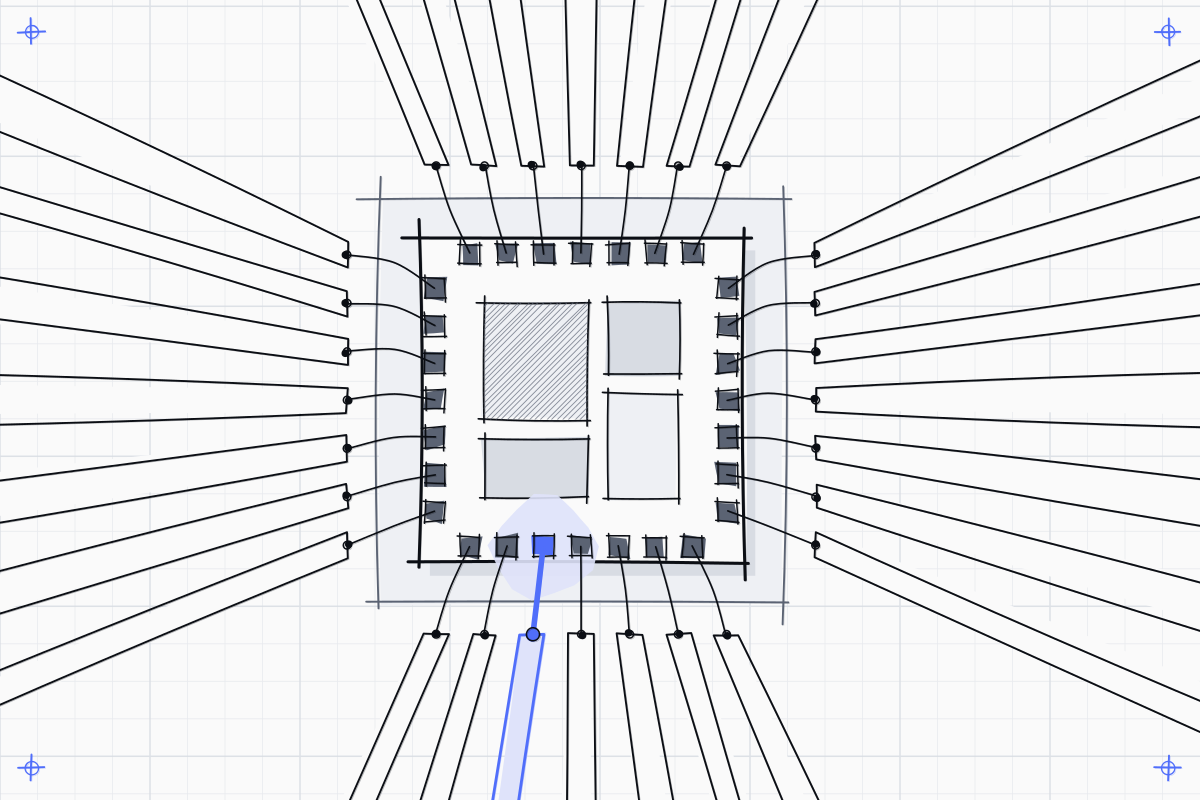
Chip manufacturing faces mounting pressure to improve quality while reducing costs and time to market. This article explores seven practical ways artificial intelligence is reshaping production processes, from breaking down data silos to detecting microscopic defects that human inspectors might miss. Industry experts share how these AI applications are helping manufacturers spot problems earlier and make smarter decisions on the factory floor.

Software engineers eyeing a transition into semiconductor hardware face unique challenges that require a fundamental shift in mindset and approach. This article breaks down critical considerations for making the leap, drawing on insights from industry experts who have successfully made the transition themselves. From understanding pre-silicon verification requirements to mastering new technical skills, these practical tips will help smooth the path into hardware engineering.

Behind everyday consumer devices lies an invisible world of advanced semiconductor technology that transforms how we live, work, and play. Industry experts reveal how components in everything from smart bulbs to medical wearables are revolutionizing our relationship with technology in unexpected ways. These sophisticated microchips and processors deliver remarkable capabilities while remaining hidden from view, powering innovations that consumers take for granted.

The semiconductor industry stands at a critical juncture, facing unprecedented challenges that shape its future. From balancing innovation with rising costs to navigating complex global regulations, chip manufacturers must adapt to a rapidly evolving landscape. As sustainability becomes paramount and the need for a skilled workforce grows, the industry grapples with protecting intellectual property in an increasingly collaborative ecosystem.

Semiconductor manufacturing is being transformed by AI applications that streamline processes and improve efficiency. This article explores how predictive analytics is optimizing manufacturing and design, featuring insights from industry experts who are implementing these technologies. Discover the six most promising AI applications that are revolutionizing how semiconductors are produced and designed.

Effective communication is the cornerstone of successful product development in the tech industry. When design teams and foundry engineers collaborate seamlessly, innovation flourishes and operational efficiency soars. This article explores key strategies that bridge the gap between these two crucial departments, leading to improved products and streamlined processes.

The semiconductor industry is evolving rapidly to meet the growing demand for specialized chips. Chip foundries are implementing innovative strategies to address this need, from lowering production barriers to enhancing manufacturing flexibility. These advancements are reshaping the landscape of chip production, enabling more efficient and tailored solutions for various applications.

The semiconductor industry stands at a crossroads, with emerging technologies promising revolutionary advancements. However, several critical barriers are impeding the widespread adoption of these cutting-edge innovations. From quantum computing challenges to regulatory uncertainties, these obstacles are shaping the future of semiconductor development and implementation.

Virtual and augmented reality technologies are revolutionizing the semiconductor industry, transforming everything from chip design to workforce training. With insights from leading experts, this article explores how immersive technologies are accelerating innovation and enhancing precision in semiconductor manufacturing. From holographic prototyping to gamified training simulations, discover how VR and AR are bridging the global expertise gap and optimizing cleanroom efficiency in this cutting-edge field.
The semiconductor industry is a complex and rapidly evolving field that demands constant innovation and adaptation. This article delves into key lessons learned from working with customers in this dynamic sector, offering valuable insights from industry experts. From testing assumptions through customer engagement to building resilient supply chains, these lessons provide a roadmap for success in the semiconductor business.

The global semiconductor industry is undergoing a profound transformation, driven by geopolitical shifts and technological advancements. As nations vie for supremacy in chip production, the focus on advanced semiconductors and supply chain resilience has intensified. This evolving landscape is further shaped by emerging markets, sustainability concerns, and collaborative innovation efforts that promise to redefine the future of this critical sector.
The semiconductor industry faces critical challenges that threaten its growth and stability. From skilled worker shortages to supply chain disruptions, these issues require innovative solutions and global cooperation. By addressing these challenges head-on, the industry can ensure its continued advancement and meet the ever-increasing demand for semiconductor technology.
The semiconductor industry is on the brink of a technological revolution that promises to transform our daily lives. From AI chips to quantum computing, seven groundbreaking technologies are set to reshape how we interact with the world around us. Drawing on insights from leading experts in the field, this article explores the semiconductor innovations poised to make the most significant impact over the next five years.

The automotive industry is undergoing a revolutionary transformation, driven by cutting-edge semiconductor technologies. From advanced driver-assistance systems to quantum-enhanced cybersecurity, these innovations are reshaping the future of transportation. As vehicles become smarter, more efficient, and safer, semiconductors are at the forefront of this automotive evolution, promising exciting advancements in electric powertrains, navigation, and all-weather sensing capabilities.
Semiconductor technology is reshaping industries across the globe, from utilities to healthcare and beyond. This article explores seven key sectors where cutting-edge semiconductor innovations are driving unprecedented change and growth. Drawing on insights from industry experts, we uncover how these technological advancements are revolutionizing smart grids, electric vehicles, wearables, artificial intelligence, quantum computing, agriculture, and manufacturing.

In the fast-paced world of semiconductors, collaboration has become the key to innovation and success. From advancing CXL technology to developing EUV lithography, industry players are joining forces to tackle complex challenges. These partnerships are reshaping the landscape of chip manufacturing, paving the way for breakthroughs in areas such as advanced packaging, custom nodes, and automotive chip innovation.
In the world of semiconductor technology, small improvements often lead to monumental advancements. From the invention of transistors to the latest breakthroughs in multi-chip integration, each step forward has transformed the computing landscape. This article explores six key areas where incremental progress has resulted in significant impacts on semiconductor capabilities and performance.

Semiconductor technology continues to advance at an unprecedented pace, reshaping our world in ways we could never have imagined. As these powerful chips become more sophisticated and ubiquitous, they bring with them a host of ethical challenges that demand our attention. From environmental concerns to privacy issues, workforce displacement to global equity, the future of semiconductor development requires careful consideration of its far-reaching implications.

Staying informed about the rapidly evolving semiconductor industry is crucial for professionals and enthusiasts alike. This comprehensive guide presents a curated selection of resources that offer valuable insights from industry experts and thought leaders. From engineering publications to virtual conferences and patent filings, these tools provide timely updates and in-depth knowledge to help readers stay at the forefront of semiconductor developments.

Recent developments in the semiconductor industry signal a transformative era marked by innovation and resilience. As sustainability and AI become driving forces, they reshape chip design and production, while supply chain challenges prompt strategic overhauls. This blog delves into how these pivotal topics are steering the future of semiconductors, from quantum computing research to specialized chip development for edge computing.
Navigating the rapidly evolving semiconductor industry requires more than just a cursory glance at the news. This article distills expert insights to unveil 7 tailored methods for those who aim to stay ahead of the curve. Discover the insider strategies and resources that industry professionals rely on for the latest advancements and discussions.
Navigating the dynamic landscape of the semiconductor industry requires a strategic approach to learning and skill development. This article distills key insights from industry experts, providing a roadmap for newcomers to prioritize areas that will maximize their potential and impact. With topics ranging from mastering the fundamentals to embracing the latest in quantum computing, the guidance offered here is both practical and forward-thinking.